
Cappuccino Cup
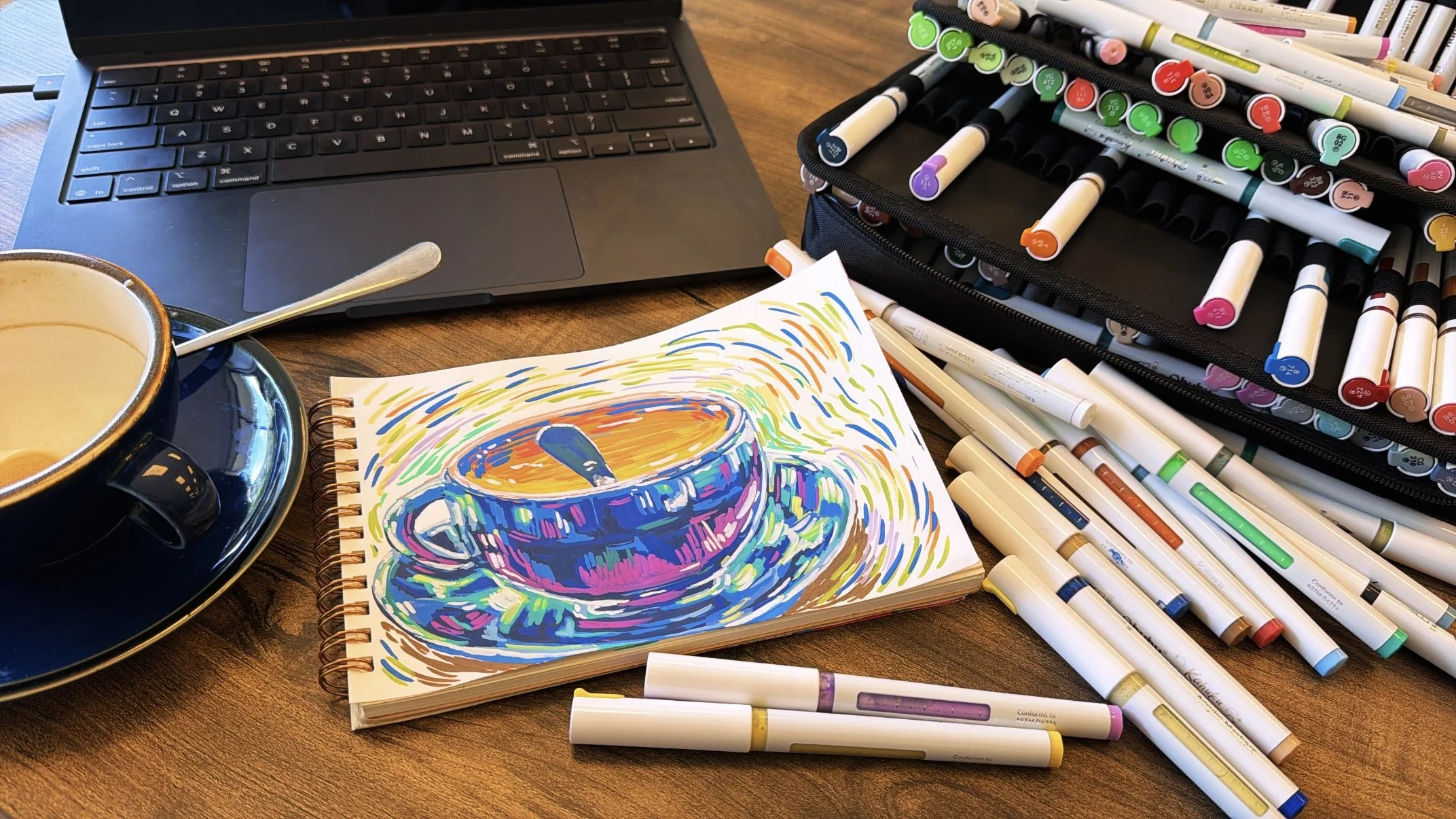
“Cappuccino Cup”
Yesterday I finally painted again after about a three‑month break (it was awful not being able to do any artwork). But I don’t really hold it against myself—giving yourself a mental break is part of self‑care and helps preserve the energy you need for your happiest creative self.
Early in the morning, after my son got on the bus, I packed my Ohuhu acrylic markers/sketchbook and drove to the nearest coffee shop (Momo’s Cafe). I sat at the table nearest the counter and noticed an empty cappuccino cup on the next table — thought it’d make a nice first subject for the blog.
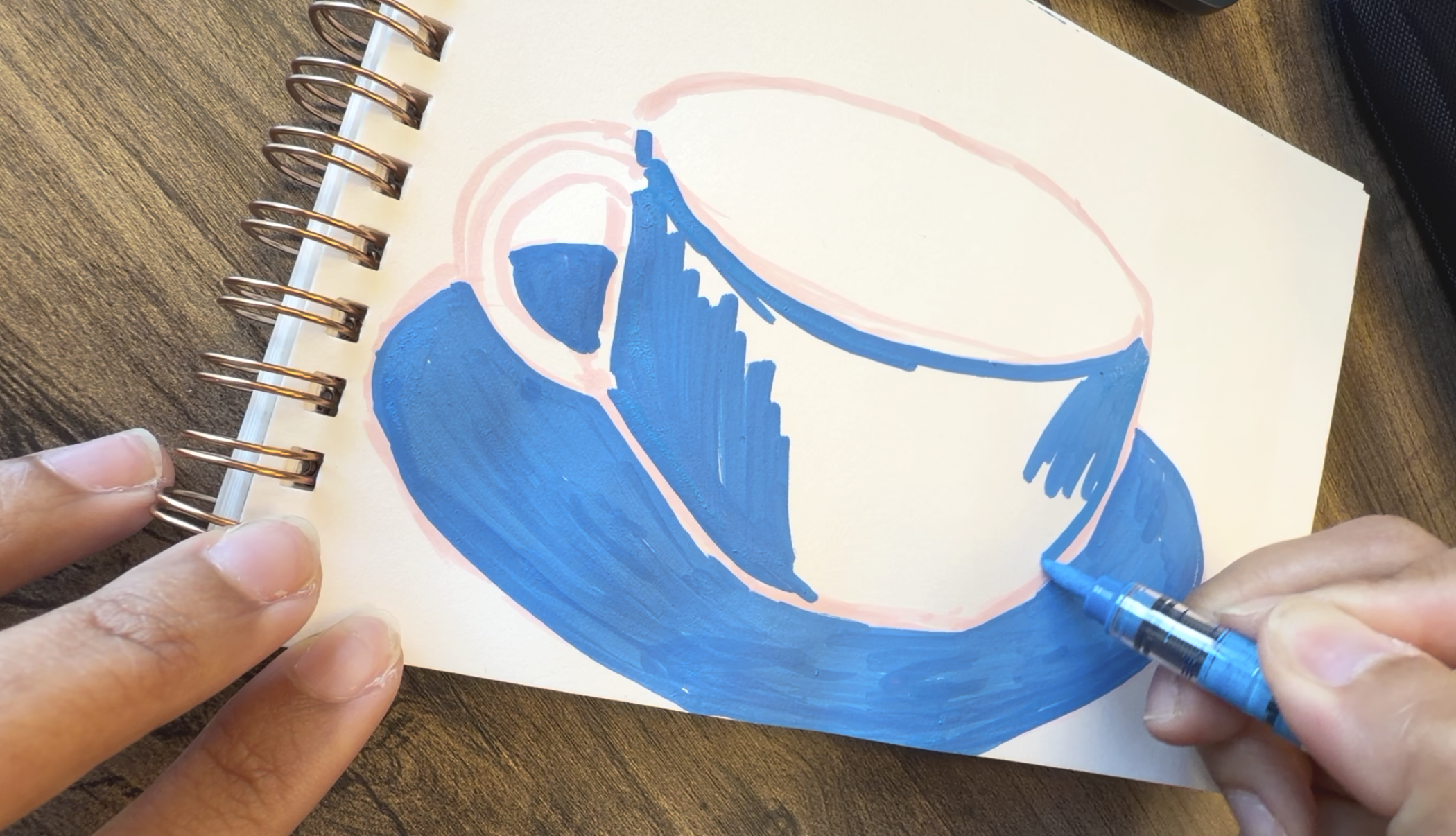
Painting the base color
When I draw a random object in a room, I always have to psych myself up to face the blank page. That empty space makes me anxious, so the first thing I do is force myself to sketch a few simple outlines of the subject. Then I block in the base color as the first layer and fill in the darkest shade.
Choosing the next shades can be tricky—especially finding tones that actually match the base. This is where people say “trust the process,” because really you just have to keep going. Though, after the base and the darkest color I usually get stuck picking the next color. I don’t follow any color theory rules; I just grab something that feels like it will blend. It’s a hit‑or‑miss, but I keep going either way.
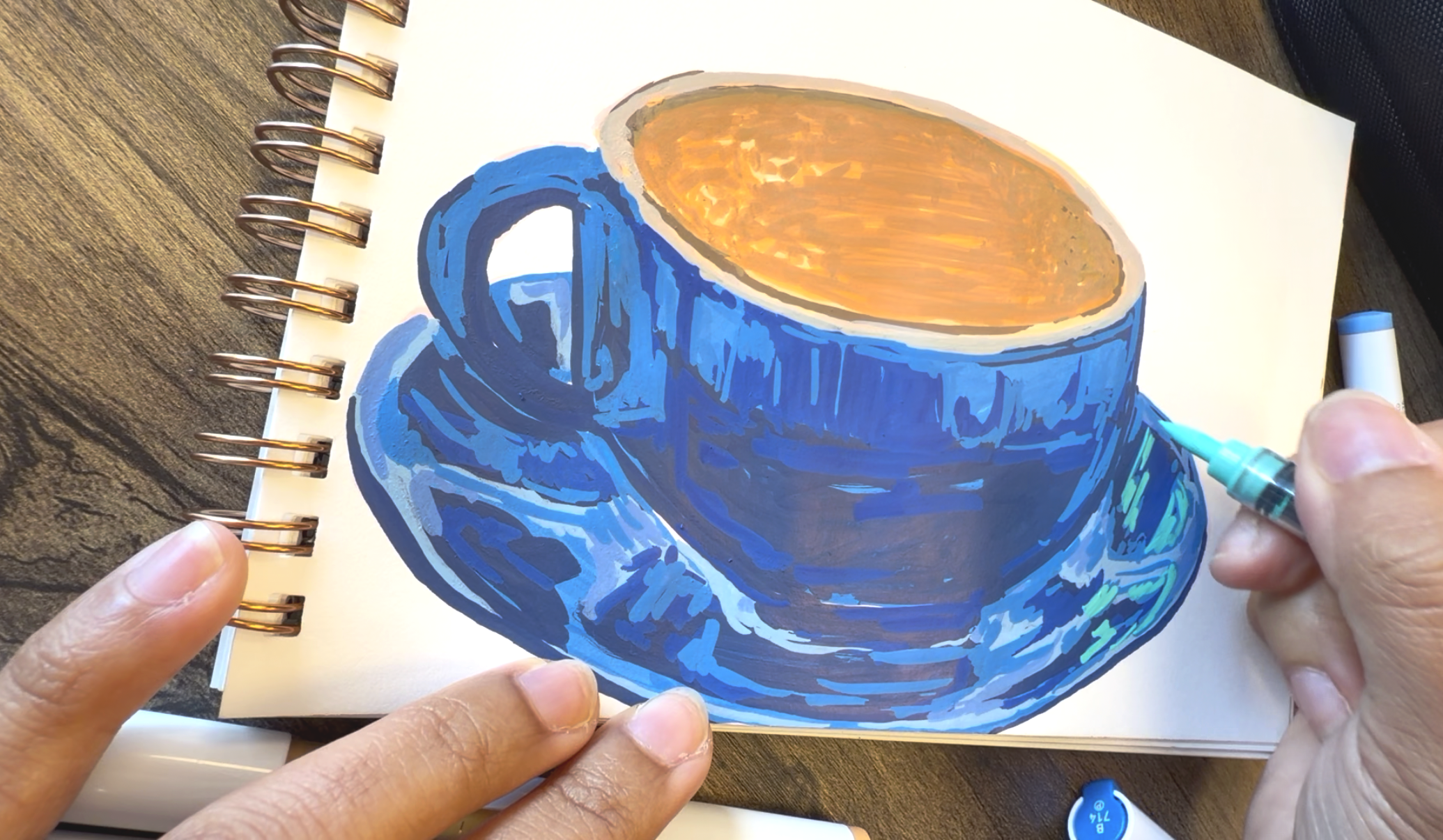
Painting with bright colors
After I paint the basic shades (base, shadow, light) I throw in some random bright colors to make the piece pop—usually yellow/green and blue/purple/pink strokes. I like those colors because they aren’t strictly part of the subject’s palette; they give the painting life and a modern vibe. And most of the time I like how they turn out so I kind of recommend it if you’re into that kind of style!
For the final steps I add highlights (white) to give a sense of dimension. That bit is the most important to me—those highlights pull the whole composition together and make the piece feel finished.
For this cup painting, I kept the background simple — just a few color strokes around the cup instead of filling in the whole wooden table. It ended up giving the piece a slight “vibrating” feel, like the artwork is subtly buzzing (if that makes sense).
The whole thing took about an hour and 10 minutes from start to finish. I worked in a 7" x 5" Penco sketchbook — the paper is lovely quality — and used acrylic markers. They’re smooth and don’t bleed through. I picked the sketchbook up at a Japanese stationery shop near Bryant Park in New York City.
After finishing the piece I packed up, went home, made lunch, and started planning other things to do. Finishing an artwork always lifts my mood and helps me be more productive for the rest of the day.
If you’re looking for something to read, Hooked by Asako is a nice pick. Adieu.
